Last checked against official sources on 28 September 2026.
This guide is general information, not legal, tax, financial or mechanical advice. Rules, rates and fees change, so confirm the details with the official sources listed at the end before you act. CarQnA is not affiliated with any of them.
Most bad used-car buys in Ireland come down to something that was knowable before the money changed hands: finance still owed, a clocked odometer, a write-off history or a bill waiting to happen. These checks take an evening and a small fee, and they are worth doing on any car, from a dealer or a private seller.
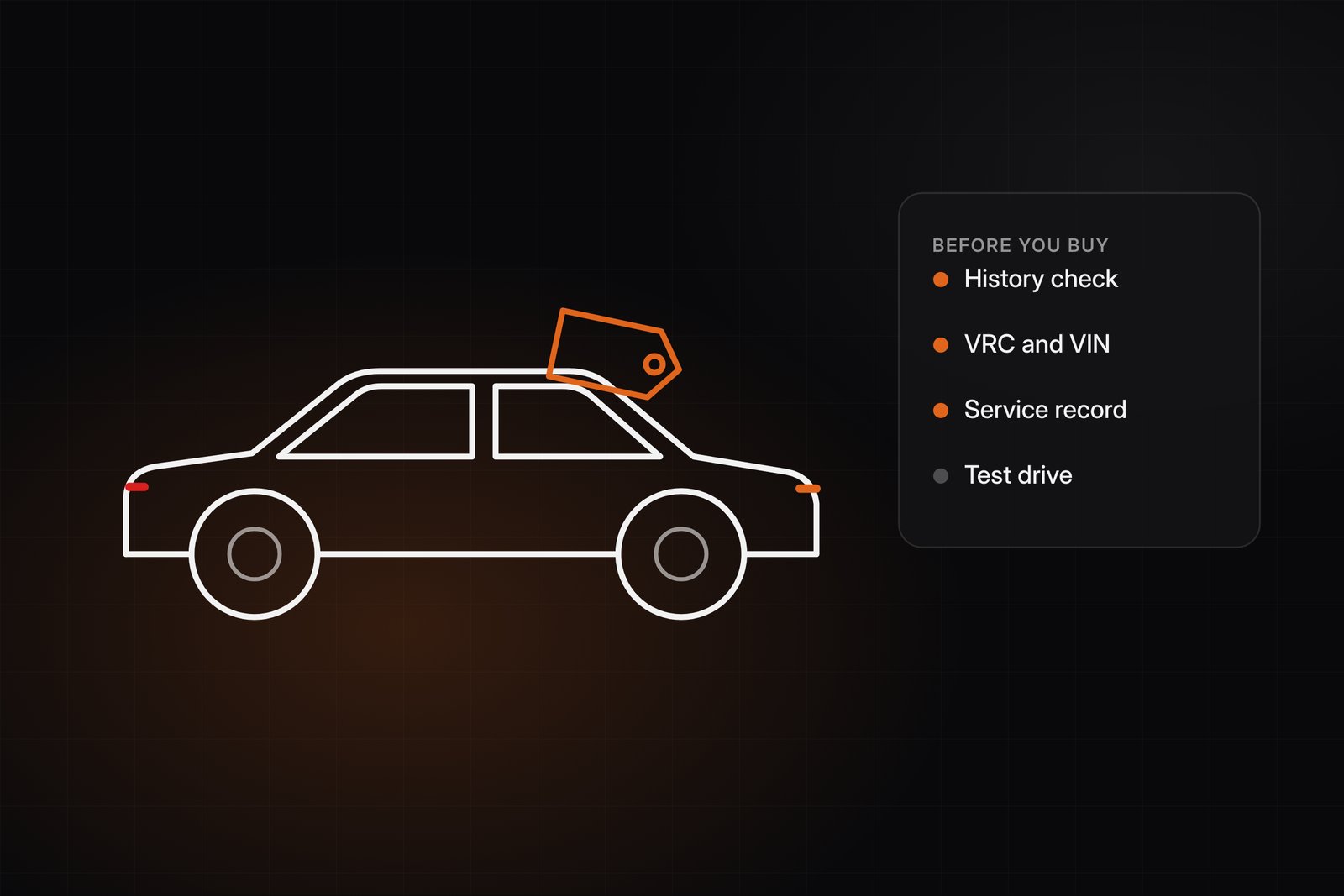
1. Run a history check before you view
A history check on the registration number tells you whether the car has outstanding finance, has been written off, has signs of mileage tampering, or was imported. In Ireland, Cartell and Motorcheck are the best known. Cartell's standard check costs €20, or €45 for three, and its premium check adds finance, UK history and a valuation. It is the cheapest insurance you will buy.
Outstanding finance matters most. If a car still has a hire purchase agreement on it, the finance company may own it, not the seller, and it can be taken back.
2. Check the paperwork matches the car
- The Vehicle Registration Certificate (VRC) should be in the seller's name and show their address.
- The chassis number (VIN) on the VRC should match the number on the car itself, usually visible at the base of the windscreen and on a plate in the door frame or engine bay.
- The registration, make, model and colour on the VRC should all match the car in front of you.
- Be wary of a seller who cannot produce the VRC or wants to meet somewhere other than their home.
3. Look at the NCT and service history
A current NCT certificate is a useful snapshot of the car's condition, and the mileage recorded at each past test helps you spot a clocked car. Compare those readings with the odometer and with the stamps in the service book. A full service history, with receipts, is worth paying a little more for; gaps are a reason to ask questions or offer less.
4. Inspect it and take a proper test drive
- View it in daylight and when the engine is cold, so starting problems and smoke are not hidden.
- Check the tyres: the legal minimum tread is 1.6mm, and uneven wear can point to alignment or suspension trouble.
- Make sure no warning lights stay on once the engine is running.
- Drive on a mix of roads, including a faster stretch. Listen for knocks and whines, and check the brakes pull straight and the gears change smoothly.
- If you are not confident, pay a mechanic or a vehicle inspection service to look it over before you commit.
5. Know what a UK import has been through
Plenty of used cars here came from the UK, where insurance write-offs are graded. Category N means the car had non-structural damage and was repaired. Category S means it had structural damage and was repaired. Both can be legal to drive, but they affect value and insurance, so the history check should flag them and the price should reflect them.
6. Work out the running costs first
The price is only the start. Check the car's motor tax band, get an insurance quote using the actual registration, and see when the next NCT and any big service, such as a timing belt, are due. Two similar cars can cost hundreds of euro a year apart to run.
Paying safely
Avoid carrying large amounts of cash. A bank transfer leaves a record, and it is sensible to confirm the funds have arrived with the seller present before you drive away. Get a written receipt showing the car's registration, the price, the date and both names.
Transferring ownership online
A private sale can now be transferred online. The seller requests a one-time transfer PIN, which is emailed to them and is valid for 30 minutes, and gives it to the buyer. The buyer completes the transfer using a verified MyGovID account, and a new VRC arrives in their name within a few working days. When you buy from a dealer, the dealer handles the change of ownership.
You need the car in your name on the VRC before you can tax it, and insurance in place before you drive it home.
Dealer or private seller?
Buying from a dealer generally gives you more protection if something goes wrong, because consumer law applies to a business selling to you. A private sale gives you far less comeback, which makes the checks above even more important. The Competition and Consumer Protection Commission explains your rights in detail.
Common questions
How do I check if a used car has finance on it in Ireland?
Run a history check on the registration with a provider such as Cartell or Motorcheck. A premium check includes outstanding finance.
How can I tell if a car has been clocked?
Compare the odometer with the mileage on past NCT certificates, the service book and the history check. Readings that go down or stall are a warning sign.
How do I transfer ownership of a car I bought privately?
Online: the seller gets a one-time PIN by email and gives it to you, and you complete the transfer with a verified MyGovID account.
What does Cat N mean on a UK import?
The car was written off for non-structural damage and then repaired. Cat S means structural damage was repaired.